Table of contents
- What Are ChatGPT Ads and Why They Matter Now
- How ChatGPT Ads Actually Work Inside the Platform
- How to Buy ChatGPT Ads: Step-by-Step Through Ads Manager
- Who Can Advertise on ChatGPT Right Now
- Which Campaigns and Categories Work Best on ChatGPT
- Measuring Performance: Metrics That Actually Matter
- Frequently Asked Questions About Buying ChatGPT Ads
- Getting Started Today
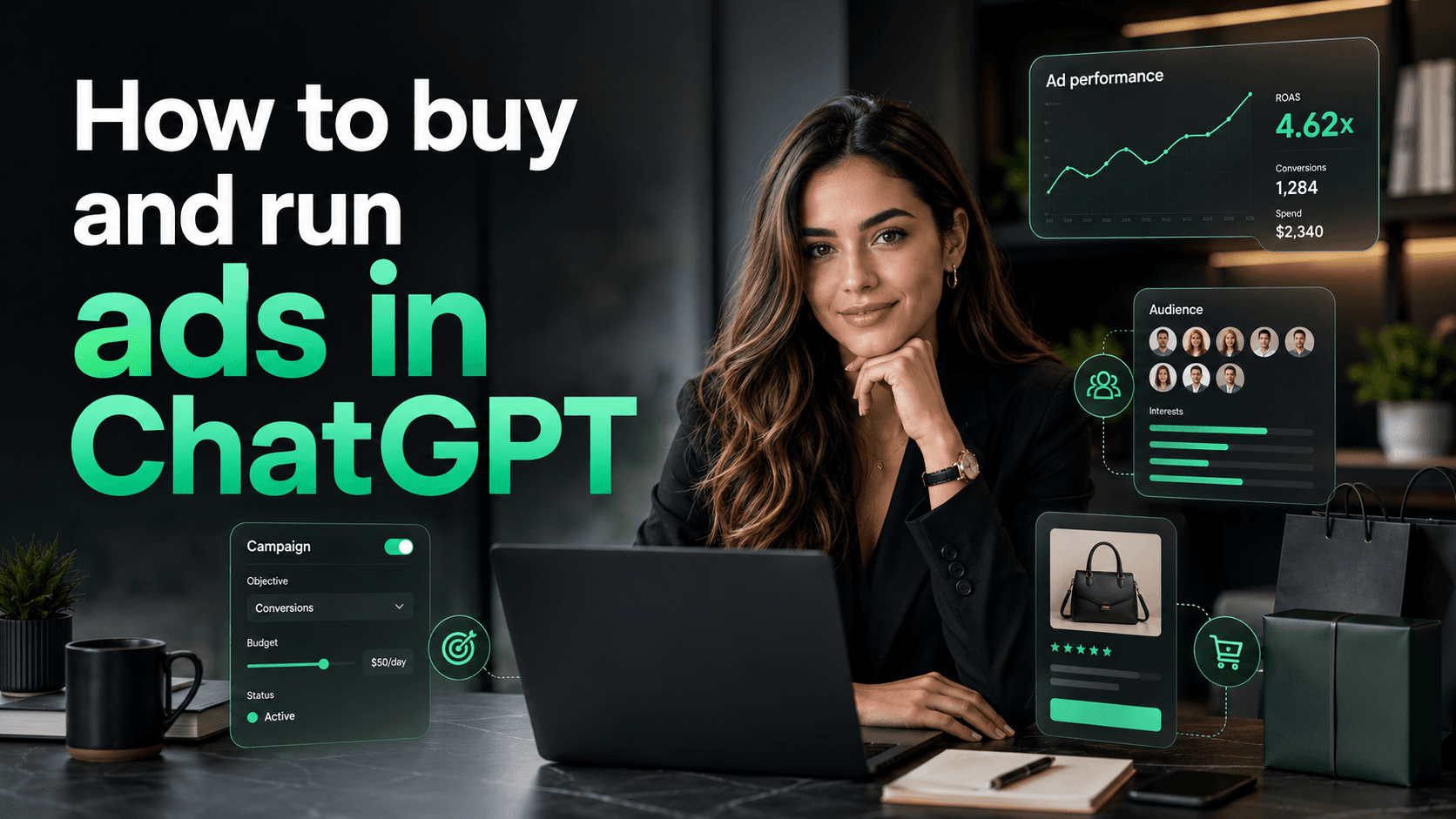
How to Buy and Run Ads in ChatGPT
For years, advertising on ChatGPT was either a rumor or a privilege reserved for brands with deep pockets and direct relationships with OpenAI. That changed in May 2026. OpenAI officially launched a self-serve Ads Manager for ChatGPT, opening the platform to U.S. advertisers without a minimum spend requirement. If you are a founder or marketer who has been watching this space, the window is now open.
This guide covers everything you need to know: how ChatGPT ads actually work inside the platform, how to register and set up your first campaign, who can advertise right now, which categories perform best, and how to measure results when industry benchmarks barely exist yet. Whether you have a $500 test budget or a $50,000 quarterly allocation, this is the practical starting point you need.
What Are ChatGPT Ads and Why They Matter Now
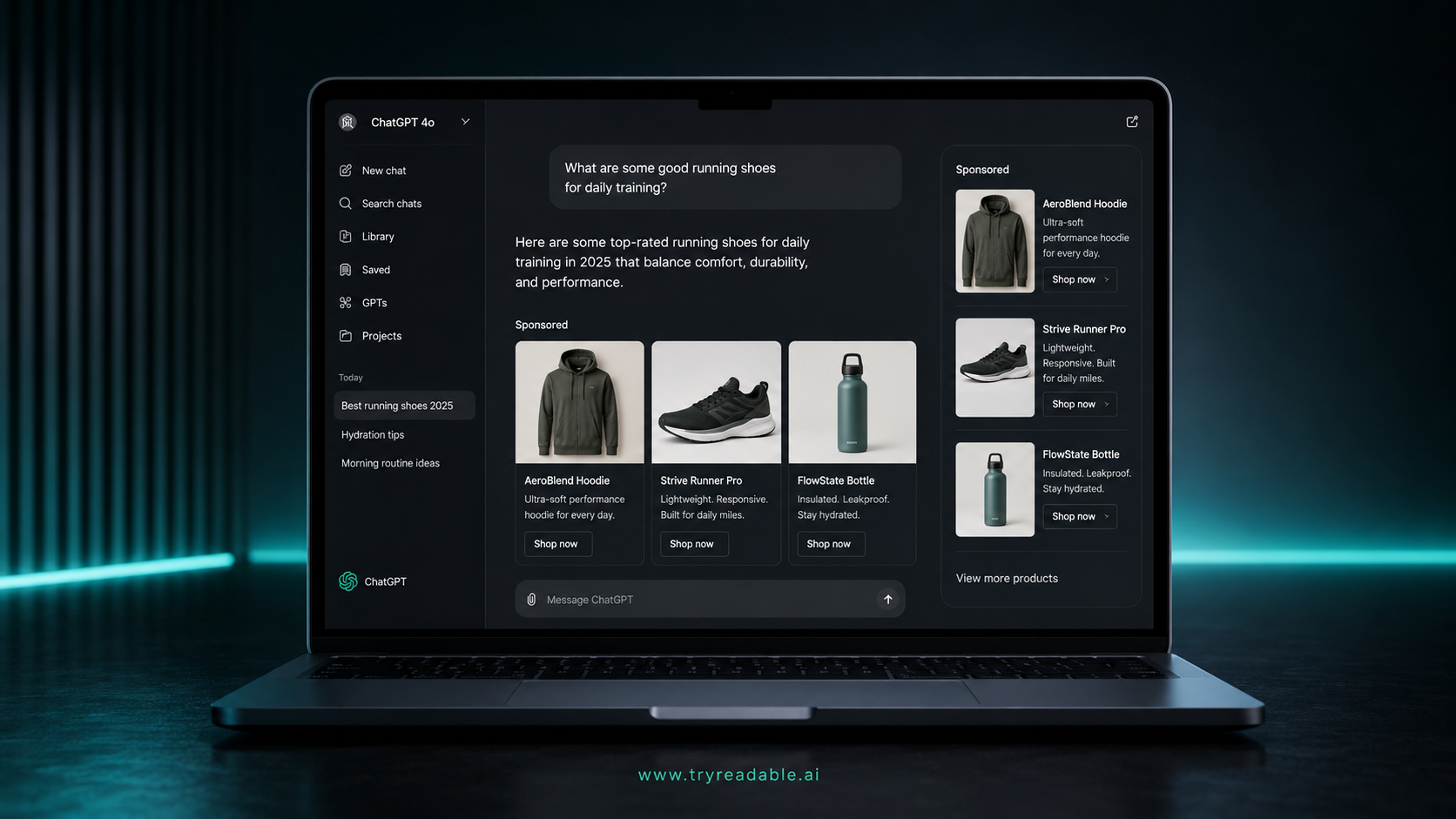
OpenAI has officially launched a self-serve Ads Manager for ChatGPT, and it represents one of the most significant shifts in digital advertising since Google opened AdWords to self-serve buyers in 2000. For the first time, any U.S.-based advertiser can register, set a budget, upload creative, and run campaigns inside the world's most widely used AI assistant, without needing a direct sales relationship or a six-figure commitment.
Until recently, advertising on ChatGPT was invite-only and required a minimum test spend of $50,000. That structure made sense for OpenAI during the early validation phase, but it locked out the majority of growth-stage companies and independent marketers. The launch of a scalable self-serve platform changes the competitive landscape entirely. Early movers now have the opportunity to establish benchmarks, learn the platform's behavior, and build audience data before the channel becomes crowded and expensive.
What makes ChatGPT advertising fundamentally different from search or social is the context in which ads appear. When someone types a query into Google, they are scanning a results page and deciding whether to click. When someone is inside a ChatGPT conversation, they are in the middle of a research or decision-making process. They have already committed attention. They are asking follow-up questions, refining their thinking, and often moving toward a purchase or action. That is a qualitatively different environment for an ad to appear in.
The data supports this intuition. Criteo, which has been running ads through ChatGPT since March 2026, reports that LLM-referred traffic converts at roughly 1.5 times the rate of other channels, despite lower click-through rates. That finding is important because it reframes how you should evaluate this channel. Lower CTR does not mean lower value. It means the clicks that do happen carry more intent.
For founders and marketers who think carefully about where attention is going, this is the moment to pay attention. A new advertising category does not open often. The self-serve launch is that moment for ChatGPT.
How ChatGPT Ads Actually Work Inside the Platform
Before you spend a dollar, you need to understand the mechanics. ChatGPT ads do not work like Google Search ads, Facebook ads, or programmatic display. The format, the bidding structure, and the measurement layer are all distinct.
Ad placement within conversations
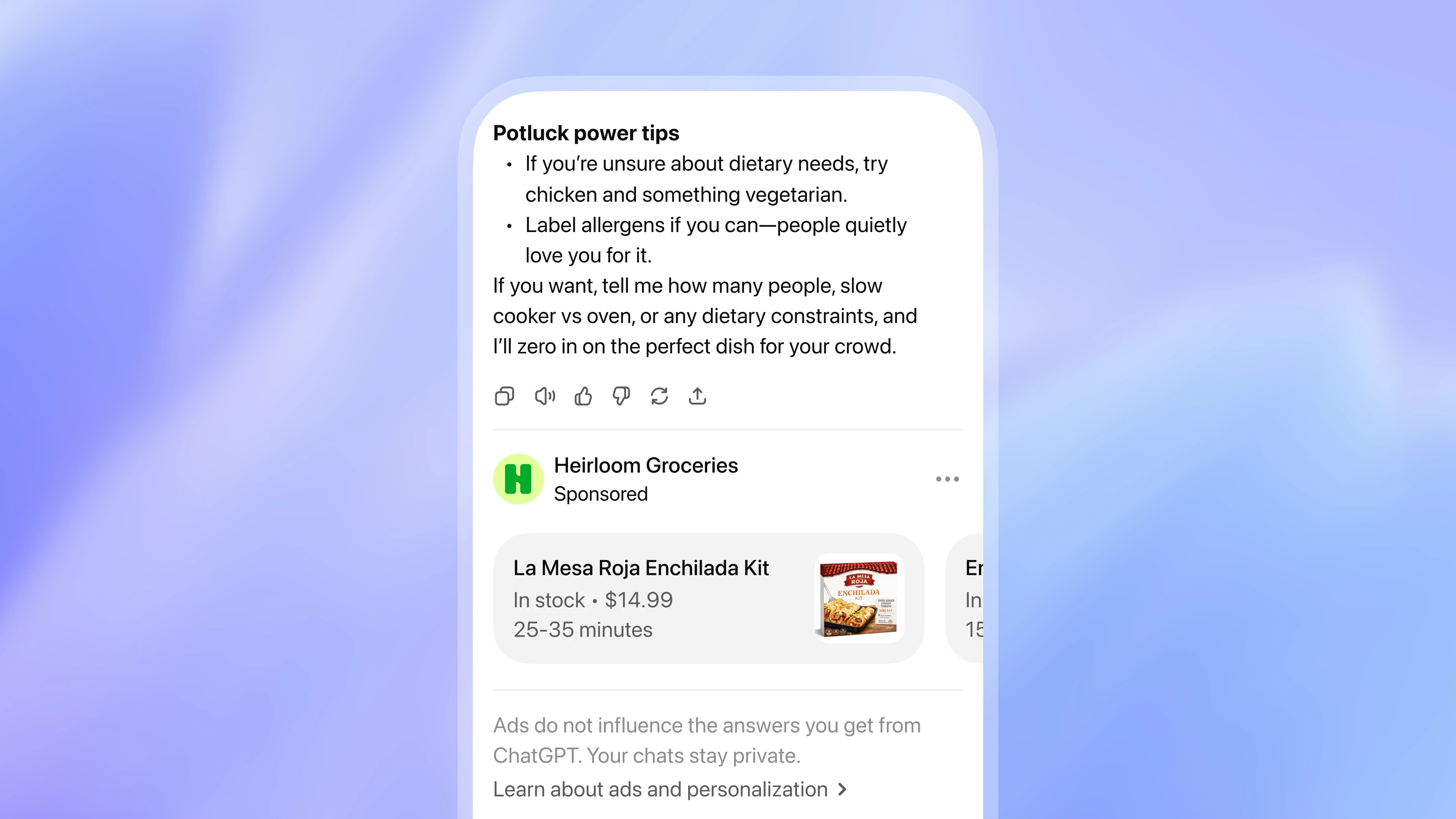
Ads appear within ChatGPT's conversational interface. There is no traditional search results page, no sidebar, and no banner placement. Instead, ads surface contextually within the flow of a conversation, presented in a way that is native to the chat format. OpenAI has not published final creative specifications publicly yet, but the placement is designed to feel relevant to the topic being discussed rather than interruptive.
This matters for creative strategy. An ad that reads like a banner headline will feel out of place inside a conversation. Copy that mirrors the informational, helpful tone of a ChatGPT response will perform better. Think of it less like writing a Google ad and more like writing a recommendation that a knowledgeable friend might make mid-conversation.
Bidding models: CPC and CPM
According to Search Engine Journal's coverage of the launch, both CPC (cost per click) and CPM (cost per thousand impressions) bidding models are available. CPC was added alongside the existing CPM option as part of the self-serve rollout. For most performance-focused advertisers, CPC is the recommended starting point because you only pay when someone actually clicks through to your site. CPM makes more sense for brand awareness campaigns where impressions themselves carry value.
Early beta data reported by AI-Ready CMO suggests CPC rates have settled in the $3 to $5 range. That is competitive with mid-tier Google Search CPCs for many categories, and significantly cheaper than branded keyword CPCs in competitive verticals like finance or SaaS.
Conversion tracking
OpenAI has built a Conversions API and a pixel into the platform. This is a critical feature because it means you are not flying blind after the click. You can track purchases, sign-ups, lead form completions, and other downstream actions that actually matter to your business. The pixel installs on your site in the same way as a Facebook or Google Ads pixel, and the Conversions API provides a server-side tracking option for environments where browser-based tracking is unreliable.
The removal of the $50,000 floor
The previous minimum test-spend requirement of $50,000 has been removed for self-serve accounts. This is the single most important structural change for small and mid-sized advertisers. You can now enter the platform with a modest test budget, gather real performance data, and scale based on results rather than committing a large sum before you know whether the channel works for your business.
For a deeper look at how your content and messaging reads to AI systems that are now serving ads, TryReadable's analysis tools can help you evaluate whether your landing page copy is clear and compelling enough to convert the high-intent traffic ChatGPT ads can deliver.
How to Buy ChatGPT Ads: Step-by-Step Through Ads Manager
Here is the practical walkthrough for getting your first campaign live. The process is straightforward, but there are a few friction points worth knowing about in advance.
Step 1: Register your account
Visit the ChatGPT Ads Manager and register your account. You will need a business email address, basic company information, and a payment method. The registration form is similar to what you would encounter on any major ad platform. Add your payment details at this stage so your account is ready to activate as soon as approval comes through.
Step 2: Wait for manual approval
This is the step that catches people off guard. As reported by Search Engine Land, registrations are currently manually approved. Not all accounts are instantly activated. OpenAI is managing the rollout carefully, which means there may be a wait of a day or more before you can access the full campaign creation UI. Register as early as possible to get into the queue. The earlier you register, the earlier you get access, and the more time you have to build a data advantage before the platform becomes more competitive.
Step 3: Set your campaign budget
Once your account is approved, you will be able to set a campaign budget. For a first campaign, treat this as a learning investment rather than a performance channel. A budget in the range of $500 to $2,000 is enough to generate meaningful data without significant financial exposure. Set a daily cap to control spend while the campaign is running.
Step 4: Choose your bidding model
Select CPC or CPM. For most founders and marketers running their first ChatGPT campaign, CPC is the right choice. You pay only when someone clicks, which means your budget is tied directly to traffic rather than impressions. Given that CTRs on ChatGPT are lower than on traditional search (more on this in the performance section), CPM can burn through budget quickly without generating proportional traffic.
Step 5: Upload your ad creative
Upload your ad creative according to the specifications provided in the Ads Manager. At the time of writing, OpenAI is still publishing final creative specs, so check the platform directly for the most current requirements. Write copy that fits the conversational context of ChatGPT. Lead with a clear value proposition, use plain language, and make the call to action specific. Avoid jargon and marketing-speak that would feel jarring inside a chat interface.
Step 6: Install the conversion pixel
Before your campaign goes live, install the conversion pixel on your site. This is non-negotiable. Without the pixel, you will have impression and click data but no visibility into what happens after the click. The pixel is what connects your ad spend to actual business outcomes. Install it on your confirmation pages, sign-up completions, and any other conversion events that matter to your funnel.
If you are using a Conversions API setup, configure that as well. Server-side tracking is more reliable in environments where browser privacy settings or ad blockers might interfere with pixel firing.
Step 7: Launch and monitor
Once your creative is uploaded, your pixel is installed, and your budget is set, launch your campaign. Check performance daily for the first week. You are looking primarily at cost per acquisition rather than click volume. If CPA is tracking favorably against your other paid channels, consider increasing budget. If it is not, adjust your creative or targeting before scaling.
For brands that want a more structured approach to evaluating new channels like ChatGPT ads alongside their existing marketing mix, TryReadable's brand analysis tools can provide a useful framework for benchmarking performance.
Who Can Advertise on ChatGPT Right Now
Access to ChatGPT Ads Manager is not universal yet. Here is the current state of eligibility and access.
U.S.-based advertisers
Self-serve access is currently open to U.S.-based advertisers only. If your business is registered in the United States and you have a U.S. payment method, you can register and apply for access. Businesses operating primarily in other markets but with a U.S. entity may also qualify, though this depends on how OpenAI evaluates registrations during the manual approval process.
Manual approval
As noted above, approval is not automatic. OpenAI is reviewing registrations manually during this phase of the rollout. This means that registering does not guarantee immediate access. The approval timeline varies, and OpenAI has not published specific criteria for what makes an account eligible. The practical advice is to register with a complete, professional business profile and a legitimate payment method, and to be patient.
Agencies and technology partners
Search Engine Land reports that agency and tech partner access is expanding as the platform scales. If you are an agency managing campaigns for multiple clients, it is worth registering now and establishing a relationship with the platform early. The agency tier of access is likely to include features like multi-account management and reporting aggregation, though these details are still being developed.
International markets
International markets, including India, do not yet have confirmed launch timelines. upGrowth's guide to ChatGPT Ads for Indian marketers notes that while the platform is generating significant interest globally, self-serve access remains U.S.-only for now. Marketers in other regions should monitor OpenAI's announcements closely and register as soon as access opens in their market.
If you are outside the U.S. and want to prepare for the eventual launch in your region, now is the time to develop your creative strategy, set up your conversion tracking infrastructure, and identify which campaigns you will prioritize when access opens. The advertisers who are ready to move quickly when international access launches will have a meaningful head start.
Which Campaigns and Categories Work Best on ChatGPT
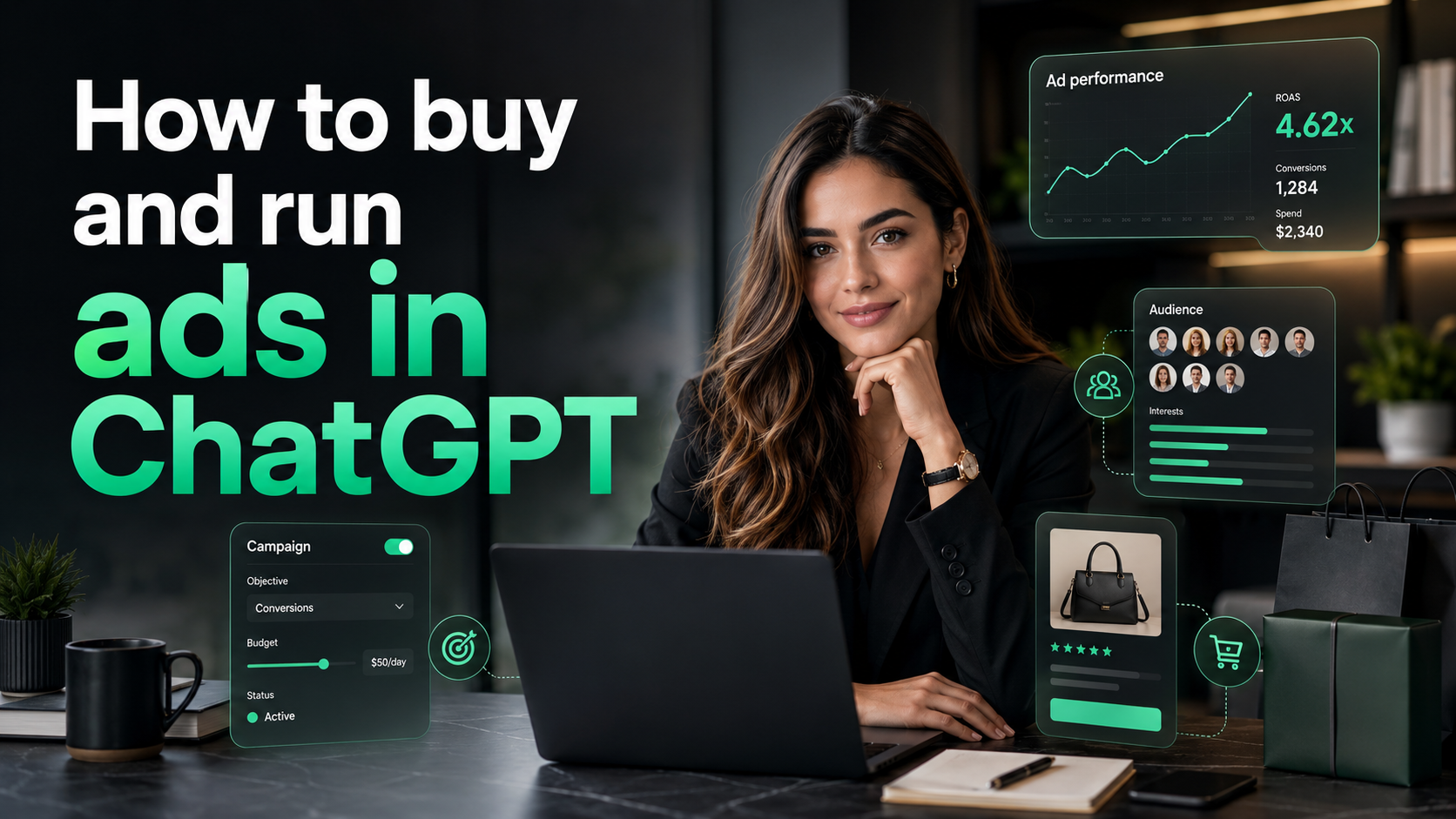
Not every campaign type will perform equally well on ChatGPT. The platform's unique user behavior creates specific conditions that favor certain categories and campaign structures over others.
High-consideration categories
The categories that perform best on ChatGPT are those where the purchase decision involves research, comparison, and deliberation. Finance, travel, B2B software, and complex consumer purchases are the strongest fits. These are categories where users naturally turn to ChatGPT to help them think through options, compare products, understand trade-offs, and make informed decisions. An ad that appears in that context is not an interruption. It is a relevant recommendation at exactly the right moment.
By contrast, impulse-purchase categories and low-consideration products are a weaker fit. If someone is asking ChatGPT about the best project management software for a remote team, an ad for a relevant SaaS tool is highly contextual. If someone is asking ChatGPT to help them write a birthday message, an ad for a consumer product is likely to feel out of place.
The research mindset advantage
Users in a ChatGPT conversation are in a research mindset. They are actively seeking information, evaluating options, and building toward a decision. This is fundamentally different from the browsing mindset of someone scrolling a social feed, or even the transactional mindset of someone typing a short-tail keyword into Google. The research mindset makes ChatGPT users more receptive to relevant recommendations and more likely to follow through on a click with a meaningful action.
This is the behavioral explanation behind Criteo's finding that LLM-referred traffic converts at roughly 1.5 times the rate of other channels. The clicks are fewer, but the people clicking are further along in their decision process.
Understanding the CTR reality
ChatGPT's click-through rate is approximately 1.3%, compared to Google Search's 29.2% for top-of-page results. That gap is significant and should not be ignored. But it should also be understood in context. People inside a ChatGPT conversation are not trying to leave it. They are engaged in a dialogue. The fact that 1.3% of users in that context click on an ad at all is actually a meaningful signal of intent.
The implication for campaign strategy is that you should not optimize for CTR on ChatGPT. Optimize for CPA. A campaign with a 1.3% CTR and a 15% post-click conversion rate is more valuable than a campaign with a 5% CTR and a 2% post-click conversion rate. The metric that matters is what happens after the click, not the click itself.
Starting with a test budget
For your first ChatGPT campaign, treat the budget as a learning investment. You are buying data and experience, not just conversions. Set a budget you are comfortable losing entirely if the campaign does not perform, run it for two to four weeks, and use the results to inform your next decision. The advertisers who approach this channel with a test-and-learn mindset will build better intuitions faster than those who either avoid it entirely or commit large budgets before they understand how it works.
If you want to ensure your landing pages are optimized to convert the high-intent traffic that ChatGPT ads can deliver, TryReadable's readability analysis can help you identify whether your copy is clear, scannable, and persuasive enough to turn clicks into customers.
Measuring Performance: Metrics That Actually Matter
Measurement is where many advertisers will struggle with ChatGPT ads, at least initially. The platform is new, benchmarks are sparse, and the metrics that matter are different from what you might be used to on other channels.
Deprioritize impressions and clicks
Impressions and click counts are less meaningful at this stage than they would be on a mature platform. Impression volume tells you about reach, but ChatGPT's audience is still growing and the ad inventory is new. Click counts tell you about traffic, but as discussed above, CTR on ChatGPT is structurally lower than on search. Optimizing for impressions or clicks will lead you to the wrong conclusions.
Focus on cost per acquisition
The metric that actually matters is cost per acquisition. CPA tells you how much you are paying for each conversion, whether that is a purchase, a sign-up, a lead form submission, or whatever action is most valuable to your business. CPA is the metric that connects your ad spend to real business outcomes, and it is the only metric that allows you to make a meaningful comparison between ChatGPT and your other paid channels.
To measure CPA accurately, you need the conversion pixel installed and firing correctly before your campaign launches. If you are using a Conversions API setup, verify that it is passing conversion events reliably. Without accurate conversion data, you cannot calculate CPA, and without CPA, you cannot evaluate whether the channel is working.
Use your own data as the benchmark
Industry benchmarks for ChatGPT ads barely exist yet. The platform launched its self-serve tier in May 2026, and the data that does exist comes from a small number of early beta advertisers. Any benchmark you read about should be treated as directional rather than definitive. Your own baseline data is more valuable than any industry comparison at this stage.
Run your first campaign, collect your own CPA data, and compare it against the CPA you are achieving on Google Ads, Meta, LinkedIn, or whatever other paid channels you are running. That comparison is the most actionable signal you have. If ChatGPT CPA is lower than your existing channels, increase budget. If it is higher, investigate whether the issue is creative, targeting, landing page quality, or simply that the category is not a strong fit for the platform.
Monitor the Conversions API data closely
The Conversions API provides more reliable data than browser-based pixel tracking alone, particularly in environments where users have privacy settings or ad blockers that might prevent pixel firing. If you are running a campaign with meaningful budget, set up both the pixel and the Conversions API to maximize data completeness. Gaps in conversion data will make it harder to optimize and will understate the true performance of your campaigns.
Expect the platform to evolve
ChatGPT Ads Manager is in beta. The reporting interface, the available metrics, and the optimization tools will all improve over time. Build your measurement infrastructure now, collect clean data from the start, and be prepared to adapt your approach as the platform matures. The advertisers who establish good measurement hygiene early will be better positioned to take advantage of new features and optimization capabilities as they roll out.
For a broader look at how to evaluate content and messaging quality across your marketing channels, the TryReadable guides section has resources on readability, clarity, and conversion-focused writing that apply directly to ad creative and landing page optimization.
Frequently Asked Questions About Buying ChatGPT Ads
Is there a minimum spend requirement?
No. The previous $50,000 minimum test-spend floor has been removed for self-serve accounts. You can register, set a budget of any size, and run campaigns without a minimum commitment. This is one of the most significant changes from the earlier invite-only model and makes the platform accessible to a much wider range of advertisers.
Can I run ChatGPT ads outside the U.S.?
Not yet. Self-serve access is currently U.S.-only. International markets, including major advertising markets like the UK, Canada, Australia, and India, do not have confirmed launch timelines. If you are based outside the U.S., register your interest and monitor OpenAI's announcements. When international access opens, being ready to move quickly will give you an advantage over competitors who are starting from scratch.
What ad formats are supported?
Ads appear within the conversational interface of ChatGPT. They are not banner ads, sidebar placements, or traditional search result formats. The creative appears contextually within the flow of a conversation. OpenAI is still publishing final creative specifications, so check the Ads Manager directly for the most current format requirements. The general principle is that copy should be conversational, clear, and relevant to the topics users are discussing.
How long does account approval take?
Approvals are manual and timelines vary. Some accounts may be approved within a day; others may take longer. OpenAI has not published specific approval criteria or timelines. The practical advice is to register as early as possible with a complete and professional business profile, and to be patient. The earlier you are in the queue, the earlier you get access.
Should I run CPC or CPM?
For performance-focused campaigns, CPC is the recommended choice. You pay only when someone clicks through to your site, which means your budget is directly tied to traffic rather than impressions. Given ChatGPT's structurally lower CTR compared to search, CPM campaigns can generate high impression volume without proportional traffic. CPM makes more sense for brand awareness objectives where impressions themselves carry value. For most founders and marketers running their first ChatGPT campaign, start with CPC, install the conversion pixel, and optimize toward CPA.
How does ChatGPT advertising compare to Google Ads?
The two channels serve different moments in the user journey. Google Search captures intent at the moment of query. ChatGPT captures intent during the research and deliberation phase, which often precedes the final search. The CTR on ChatGPT is lower (approximately 1.3% versus Google Search's 29.2%), but post-click conversion intent is higher, with Criteo reporting LLM-referred traffic converting at roughly 1.5 times the rate of other channels. The two channels are complementary rather than competitive, and the strongest strategy is likely to use both.
What should my landing page look like for ChatGPT ad traffic?
Because ChatGPT ad traffic comes from users in a research mindset, your landing page should be informative, clear, and structured to answer the questions a deliberate buyer would have. Avoid landing pages that are purely promotional or that assume the visitor is ready to buy immediately. Lead with value, provide enough information to support a decision, and make the next step obvious. Readability matters enormously here. A page that is dense, jargon-heavy, or hard to scan will lose the high-intent visitor you just paid to acquire. Use TryReadable's analysis tool to check whether your landing page copy is clear and accessible enough to convert research-phase visitors.
Is it worth advertising on ChatGPT right now?
For most founders and marketers in high-consideration categories, yes, with the right expectations. Treat your first campaign as a learning investment. The platform is new, benchmarks are forming, and the advertisers who build experience now will have a significant advantage as the channel matures and becomes more competitive. If you have a modest budget you can allocate to experimentation, register today, get in the approval queue, and run a small test campaign. The data you collect will be more valuable than any industry report published six months from now.
Getting Started Today
The launch of ChatGPT's self-serve Ads Manager is a genuine inflection point for digital advertising. A new channel with high-intent users, no minimum spend requirement, and CPC rates that are still relatively low does not come along often. The window for early-mover advantage is open right now, and it will not stay open indefinitely.
The practical steps are straightforward: register at the ChatGPT Ads Manager, wait for manual approval, set a modest test budget, choose CPC bidding, upload conversational creative, install the conversion pixel, and measure CPA against your existing channels. Start in a high-consideration category where your audience is likely to be in a research mindset. Treat the first campaign as tuition, not performance.
If you want to make sure your landing pages are ready to convert the high-intent traffic that ChatGPT ads can deliver, run your pages through TryReadable's analysis tool before your campaign goes live. Clear, readable, well-structured copy is the difference between a click that converts and a click that bounces.
For teams that want a more comprehensive approach to AI-era marketing, book a demo with TryReadable to see how readability and content clarity fit into your broader growth strategy.
The channel is real. The opportunity is now. Register early, test smart, and measure what matters.
Sources
- OpenAI Launches Self-Serve Ads Manager for ChatGPT
- ChatGPT ads expand with self-serve buying
- ChatGPT Ads: The Complete Guide for Indian | upGrowth
- You Can FINALLY Run ChatGPT Ads
- Google Search Central documentation
- Google AI Overviews documentation
- OpenAI announcement archive
- Anthropic documentation
- Schema.org structured data vocabulary
- W3C JSON-LD specification
- Google Analytics developer docs
- NIST AI Risk Management Framework
Is your budget being wasted on channels where intent is lower?
ChatGPT ads reach users mid-decision with 1.5x higher conversion rates than traditional channels. Let's map out which campaigns will work for your business and how to capture that intent first.