AI agents are no longer optional experiments in ecommerce. They are an emerging demand channel.
Shopify’s Model Context Protocol (MCP) introduces a foundational shift in how products and actions are exposed to autonomous systems. Instead of just optimizing for human browsing and checkout flows, merchants now must optimize for APIs, structured contexts, and machine interactions that AI agents can reliably interpret and act on.
This article explains:
- What MCP is and how it works
- Why it matters strategically
- How it changes visibility, execution, and competition
- What brands should do today to prepare
This is not a technical SDK guide. It is a business strategy playbook for winning in an AI commerce world.
What is the Model Context Protocol (MCP)?
The Model Context Protocol is Shopify’s standard for making commercial systems machine-understandable. It defines how product data, inventory, pricing, policies, and actionable endpoints are described so that autonomous agents — whether proprietary Shopify AI, third-party bots, or generative models — can consume and act on them.
Instead of expecting a user to:
- Visit a product page
- Review images and descriptions
- Add to cart
- Submit checkout form
…an AI agent can retrieve highly structured information, validate constraints, perform actions, and complete transactions without human scrolling, clicking, or manual forms.
MCP is not Shopify’s version of a plugin. It’s a commerce interface specification for machines. It tells agents:
- What actions are available
- What the parameters are
- How to invoke them
- What assumptions are valid
- What outcomes to expect
For commerce leaders, this is the architecture of visibility in an AI-mediated world.
Why MCP changes how commerce works
1. Machines don’t see pages the way humans do
Humans interpret visual layout, branding cues, and persuasive copy. Agents do not.
Agents operate on structured context: verbs, arguments, constraints, confirmations.
If your data is not MCP-ready, it may as well not exist for an agent.
2. MCP is about action, not browsing
In an AI world, visibility doesn’t end at discovery — it includes execution.
MCP surfaces the verbs of commerce:
- Add to cart
- Check price
- Verify availability
- Calculate shipping
- Initiate payment
These verbs become the new surface area for competition.
3. APIs become the new user interface
Traditional commerce treats UI as the primary interface. MCP treats APIs as the product interface. That changes which teams hold strategic leverage:
| Traditional Commerce | AI Commerce (MCP) |
| UX/UI designers | API architects |
| Conversion optimization | Context architects |
| Visual storytelling | Structured logic |
How MCP works in practice
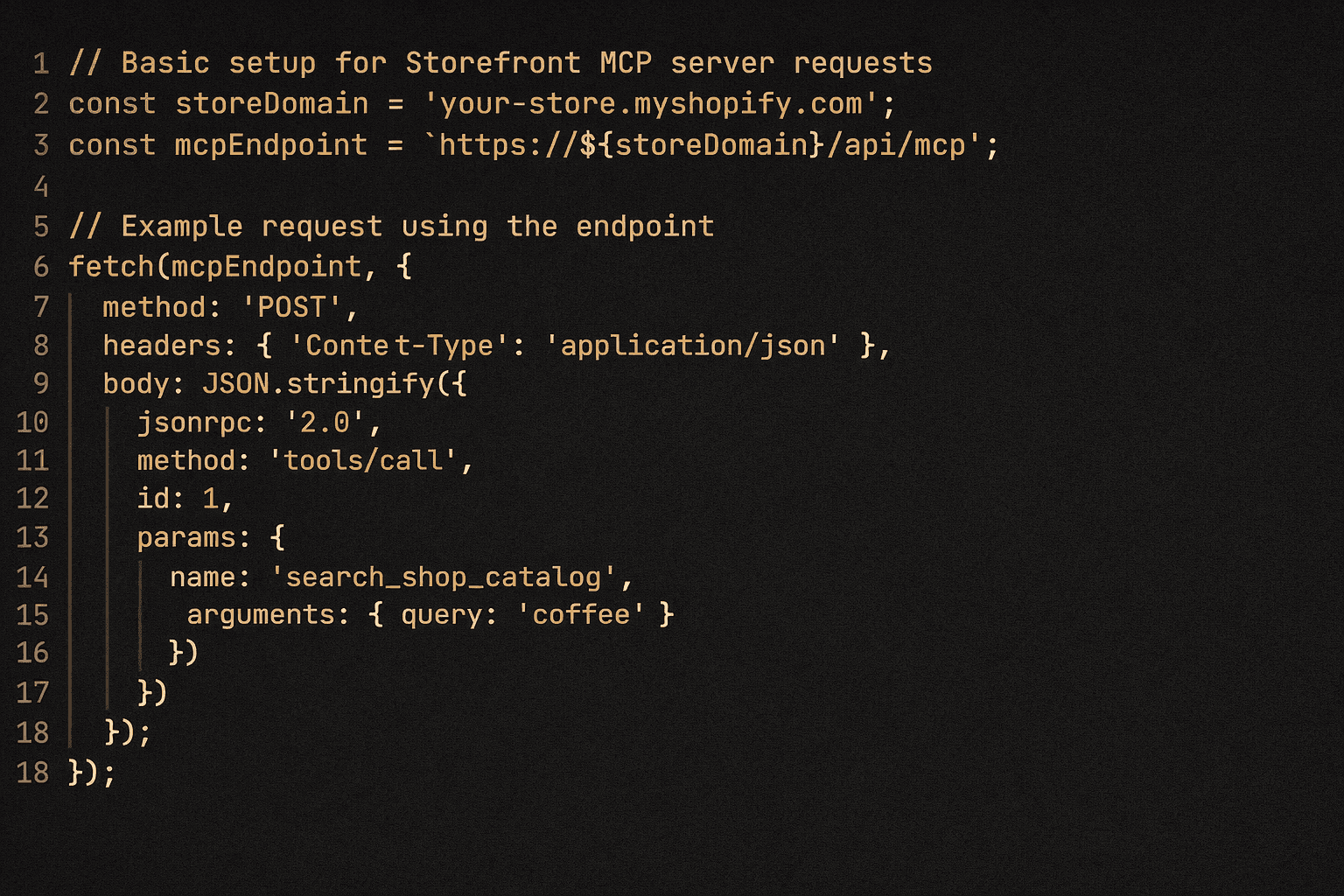
At a high level, MCP builds on three pillars:
Structured Action Context
Structured data with clear, predictable fields and attributes that agents can extract without heuristic parsing.
Action Surfaces
Programmatically callable endpoints for:
-
Product info retrieval
-
Constraint validation
-
Order initiation
-
Pricing confirmation
-
Delivery guarantees
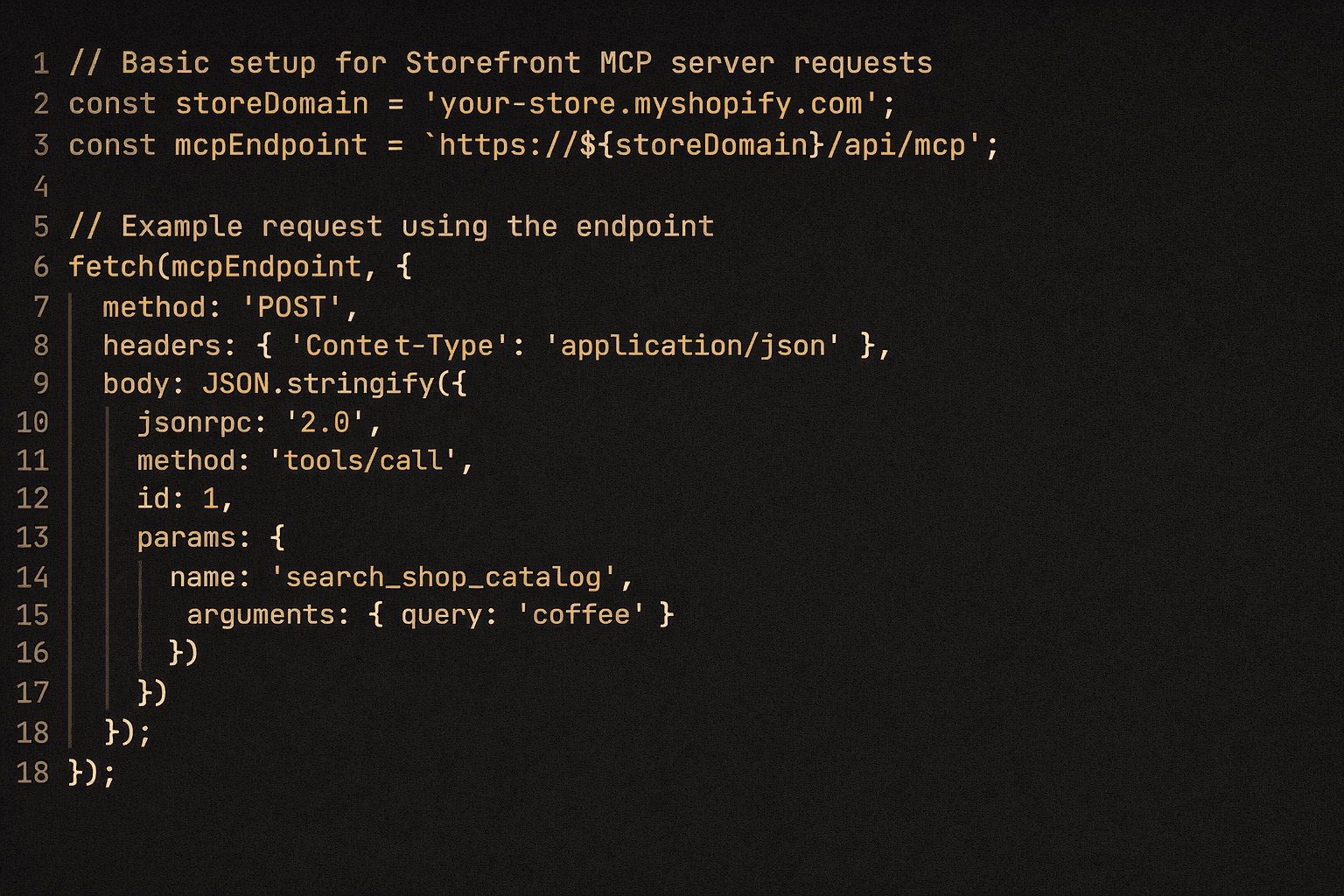
These are not incidental APIs — they are the interface.
Agent Constraints and Safety
MCP defines:
- What is permissible
- What agents should assume
- What needs confirmation
This is critical for agent trust and adoption.
What merchants must do now
1. Publish machine-readable product truth
This is more than schema.org. It is:
- canonical, reliable data
- exposed over predictable endpoints
- free of ambiguous markup
If agents cannot recognize your product attributes, they skip you.
2. Expose reliable action endpoints
Checkout pages are brittle. Agents cannot fill invisible forms, handle UI redirects, or interpret client-side logic.
Expose endpoints that:
- describe required parameters
- validate before execution
- return deterministic success or failure
This is core to MCP.
3. Validate with real agent traffic
Simulate real agent requests. Monitor:
- inclusion in decision sets
- response quality
- successful executions
- failure modes
If your logs show parsing failures, your product isn’t visible even if it exists.
4. Build agent interaction analytics
Sessions, click-through rate, engagement — these fade when agents act without sessions. The new relevant metrics are:
- Retrieval inclusion rate
- API invocation success
- Constraint satisfaction ratio
- Execution reliability
- Delivery confirmation rate
These are now your growth KPIs.
Strategic Implications for Leaders
MCP is not a Shopify ecosystem play. It is a commerce infrastructure play.
Leadership priorities shift
- Product teams must own machine context as a first-class asset
- Engineering teams must treat APIs as core interfaces
- Analytics teams must instrument agent behavior
- Marketing teams must express brand value in structured truth, not just creative
Brands that invest early in MCP-readiness will outpace competitors that treat it as a “feature.”
Conclusion
Shopify’s Model Context Protocol is not a trend. It is a signpost for where digital commerce is headed: interfaces for machines that act on behalf of humans.
If your commerce stack cannot be read, reasoned over, and executed by AI systems, it will be bypassed.
Visibility is no longer about ranking.
Performance is no longer about sessions.
Your product is no longer just a web experience.
Your product is a machine-accessible commerce surface.
Is your Shopify store ready for AI-agent demand?
If agents need to understand your catalog, availability, and checkout path, talk to us about making your storefront easier for AI systems to recommend.