Most ecommerce interfaces were designed for humans clicking through pages.
That assumption is breaking.
AI agents increasingly interpret intent, evaluate options, and execute purchases on behalf of users. The interface is no longer a website or app. It is the decision logic of an autonomous system.
This shift forces a rethink of how commerce experiences are designed, measured, and optimized. Brands that continue building purely human-first interfaces will lose visibility and control as agents mediate more of the buying journey.
Agentic commerce interfaces are not a future concept. They are already emerging across search, shopping, procurement, and automation platforms.
The question is not whether this transition happens.
It is whether your organization adapts fast enough to remain relevant.
What is an agentic commerce interface
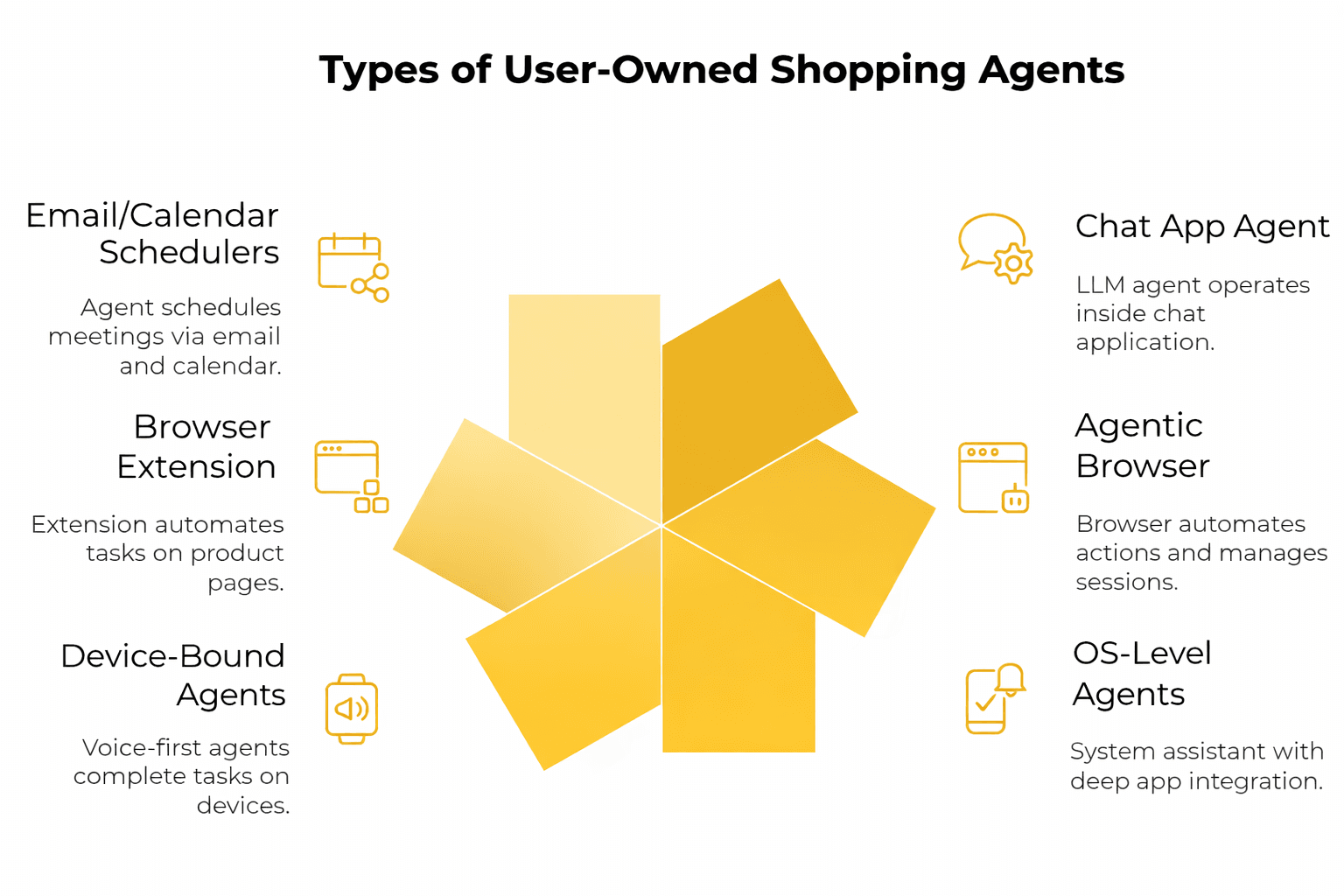
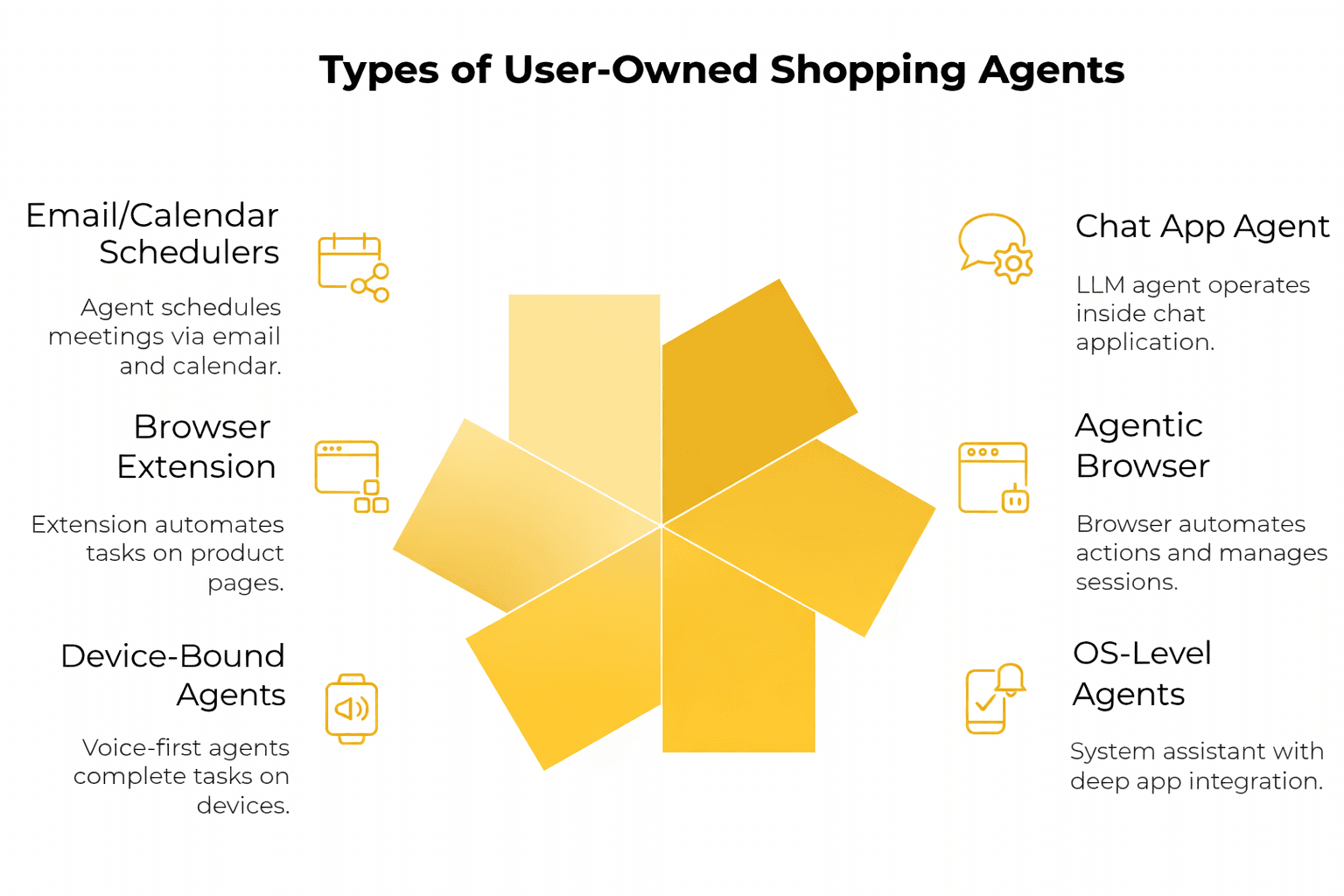
An agentic commerce interface is the layer where an AI agent interacts with your business systems to interpret intent, evaluate products, and complete transactions.
Unlike traditional interfaces:
- There are no pages to browse
- No visual hierarchy to influence behavior
- No microcopy to persuade a human
- No UX patterns like carousels, filters, or hero sections
The interface is entirely machine-mediated.
Agents consume structured data, policies, availability, constraints, and execution endpoints. They optimize for correctness, speed, and reliability, not emotional appeal.
Your interface becomes an API surface, not a visual surface.
Why this changes the economics of digital commerce
Agentic interfaces collapse multiple layers of the funnel.
Discovery, comparison, validation, and purchase converge into a single automated workflow driven by intent.
This creates three structural shifts:
1. Visibility shifts upstream
If an agent cannot reliably retrieve and validate your product data, your brand never enters the consideration set.
There is no second chance through retargeting, creative optimization, or brand recall.
Visibility becomes a systems engineering problem.
2. Conversion becomes deterministic
Agents remove many sources of human friction:
- No indecision loops
- No abandoned carts due to UX confusion
- No persuasion bias
If constraints are satisfied and the system trusts execution reliability, the transaction proceeds.
Conversion optimization becomes constraint optimization.
3. Differentiation moves from experience to infrastructure
Design polish matters less than operational clarity.
The best-performing brands will be the ones with:
- Clean product truth
- Stable pricing logic
- Predictable fulfillment
- Explicit policies
- Reliable order execution
Infrastructure becomes the product.
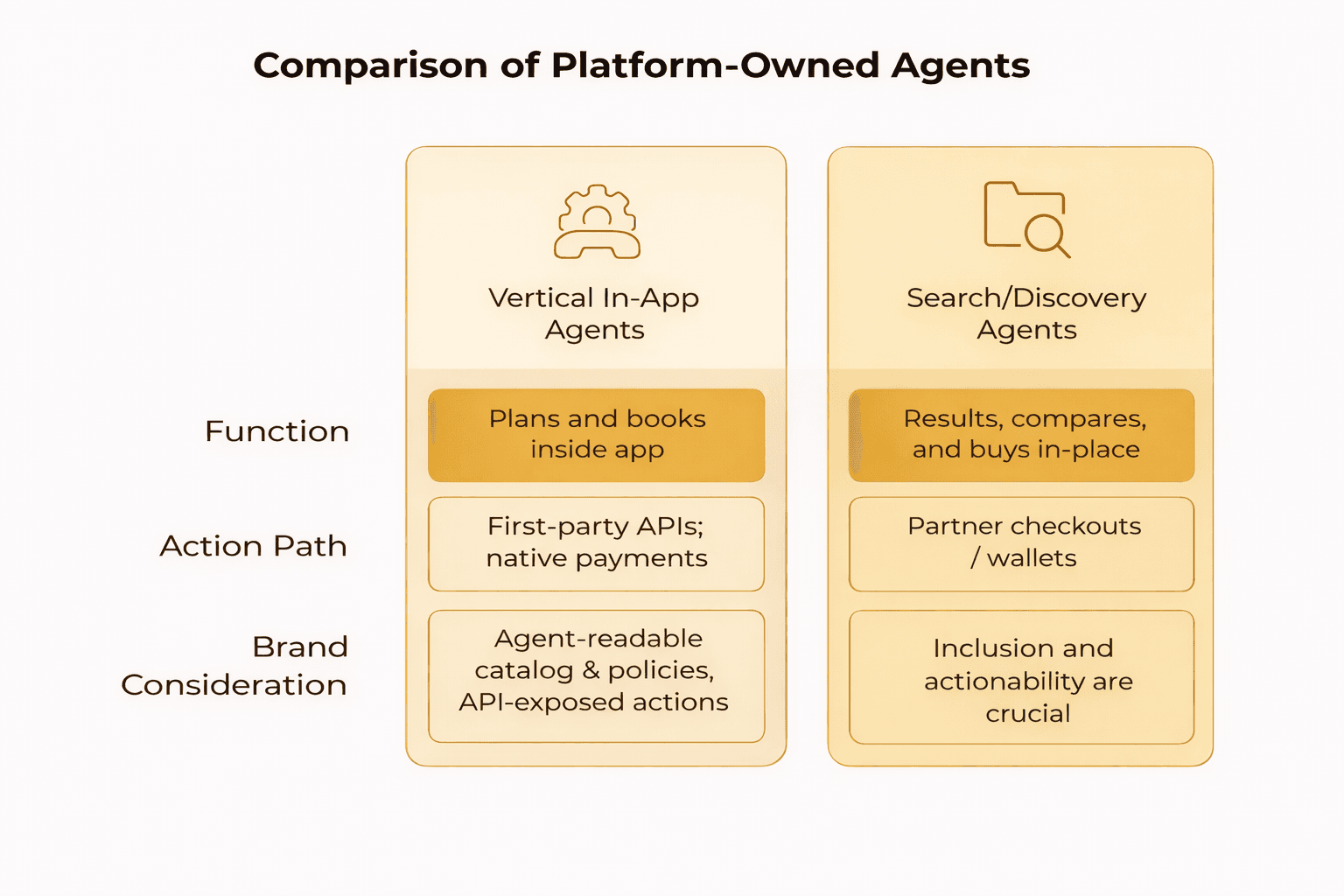
How agentic interfaces actually operate
Agentic interfaces function as orchestration layers between intent and execution.
A simplified flow looks like this:
- The user expresses intent in natural language.
- The agent translates intent into structured constraints.
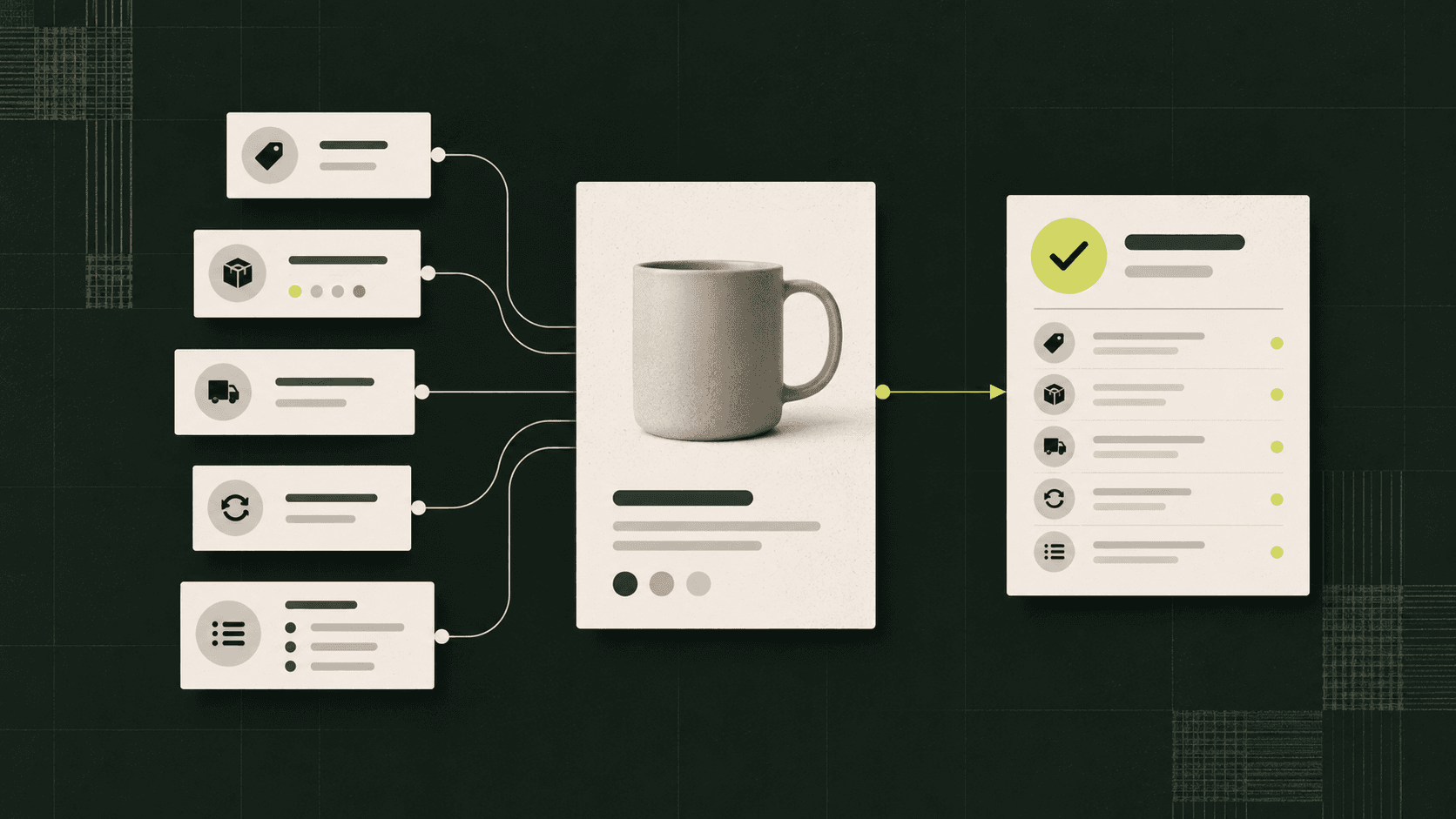
- The agent retrieves candidate products from trusted sources.
- Data is validated against availability, pricing, and policies.
- The agent selects the best option based on confidence.
- The agent executes the transaction programmatically.
At no point does the agent need a traditional webpage.
Every failure mode comes from missing, ambiguous, or unreliable data.
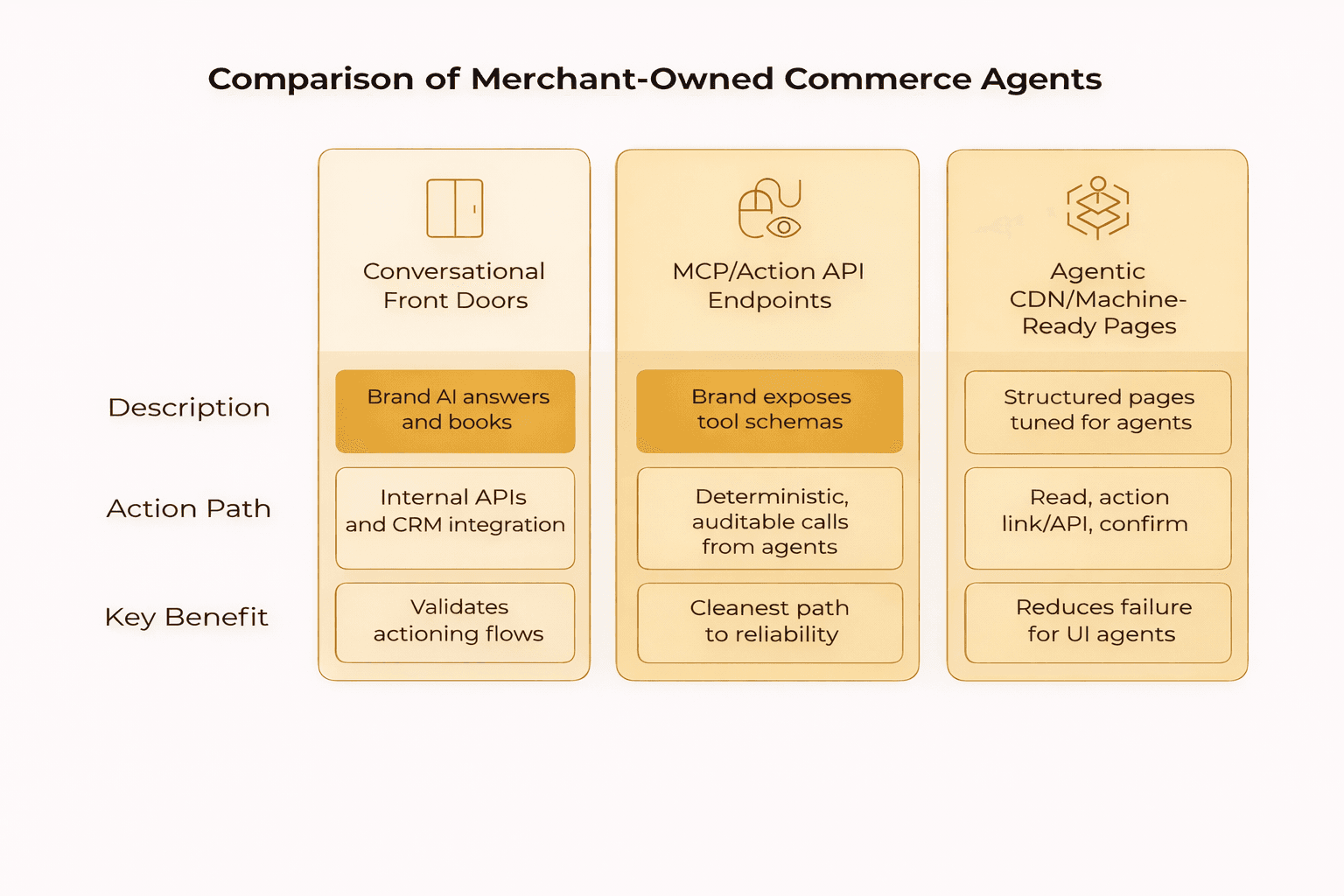
What most organizations get wrong
Treating this like another UI redesign
Teams attempt to adapt agentic interfaces using UX thinking.
This fails because agents do not interpret layout, visual emphasis, or copy nuance.
They interpret data contracts and system guarantees.
Overestimating brand influence
Agents optimize for outcomes, not affinity.
If a cheaper, more reliable option satisfies constraints better, it wins regardless of brand equity.
Brand becomes a secondary signal.
Assuming analytics will look the same
Traditional metrics like sessions, bounce rate, and funnel attribution break down when no human ever visits your site.
New metrics center on:
- Retrieval success
- Data confidence
- Constraint satisfaction
- Execution reliability
- Agent-level conversion
If you cannot measure these, you cannot compete.
How to design for agentic commerce interfaces
This is not a design problem. It is an operational architecture problem.
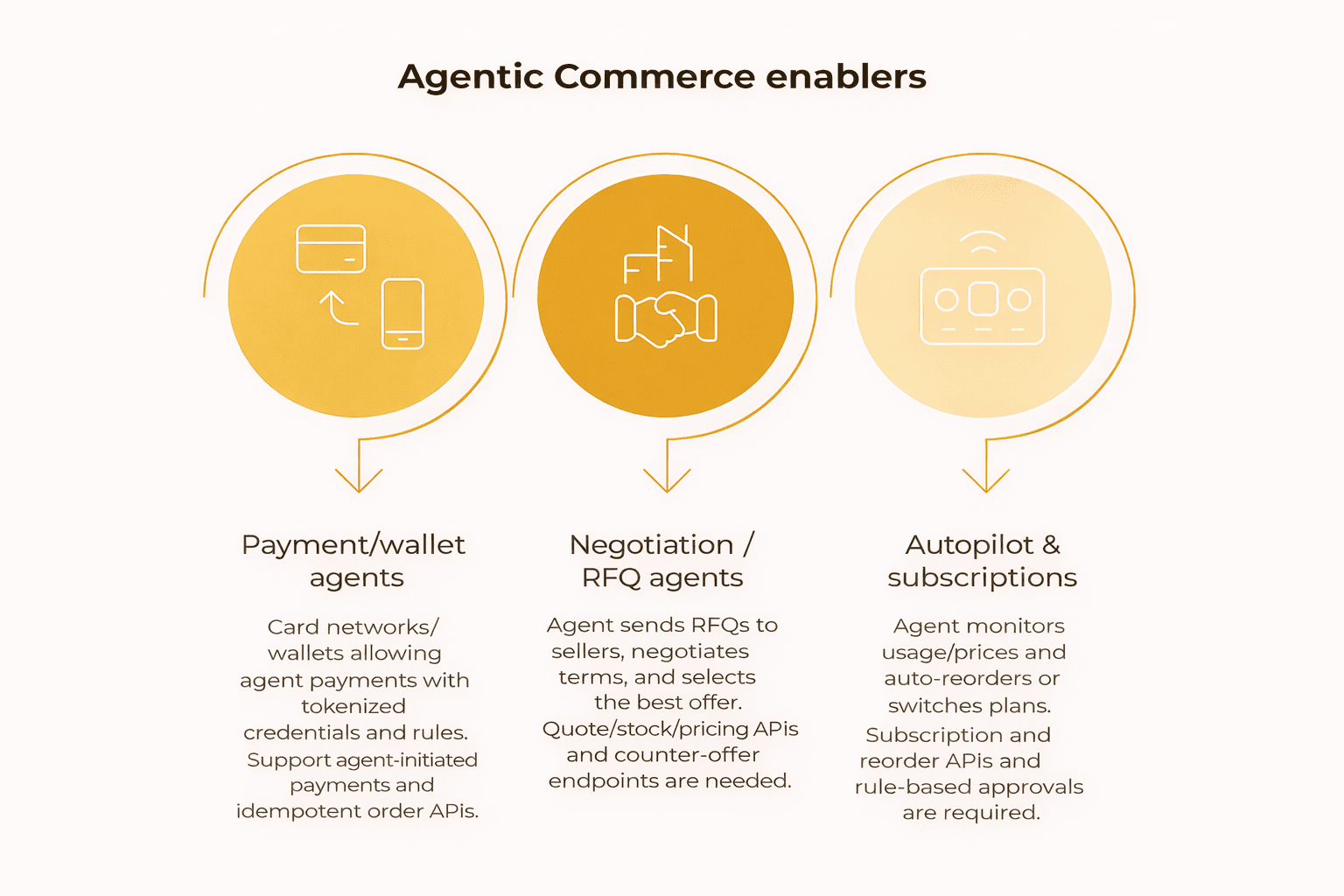
1. Make product truth explicit and machine-readable
Eliminate ambiguity across:
- Pricing
- Variants
- Availability
- Delivery timelines
- Policies
- Limitations
Assume anything implicit will be misinterpreted or ignored.
2. Publish stable retrieval surfaces
Agents need predictable endpoints with consistent schemas and fast response times.
Avoid:
- Dynamic rendering dependencies
- Authentication walls for core facts
- Session-coupled URLs
- Unstable markup structures
Reliability beats richness.
3. Treat policies as executable constraints
Return rules, shipping limits, compliance boundaries, and regional restrictions must be explicit and structured.
Agents cannot reason safely over prose.
4. Enable programmatic execution paths
Expose minimal order, validation, and confirmation endpoints.
Agents should be able to complete transactions without brittle browser automation.
5. Instrument agent-facing telemetry
Track:
- Parse success rates
- Data completeness
- Constraint failures
- Execution latency
- Transaction success
These replace traditional UX metrics.
Strategic implications for leadership
This shift changes organizational priorities:
- Product teams move closer to systems engineering
- Marketing teams become stewards of data clarity and trust
- Analytics teams redefine measurement frameworks
- Revenue teams rethink acquisition attribution
Agent readiness becomes a competitive moat.
The cost of inaction compounds quietly as visibility erodes upstream.
Where Readable fits
Readable helps organizations observe how AI agents retrieve, interpret, and act on their product data.
It exposes visibility gaps, parsing failures, policy ambiguity, and execution friction that suppress agent-driven conversion.
Instead of guessing how autonomous systems see your business, you get direct operational insight.
The bottom line
Agentic commerce interfaces redefine how buying decisions are made.
If your systems are not optimized for autonomous interpretation and execution, you will lose relevance in high-intent demand flows.
This is not a UX trend.
It is an infrastructure shift.
Could AI agents change how customers buy from you?
If your buying journey may soon be shaped by agentic interfaces, talk to us about the content, product data, and trust signals your business needs to expose.